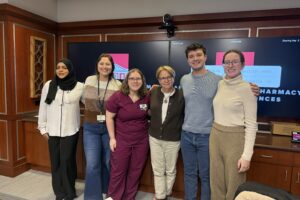
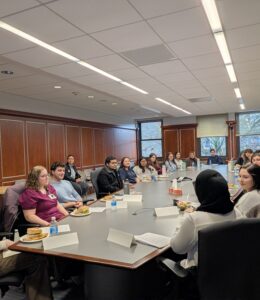
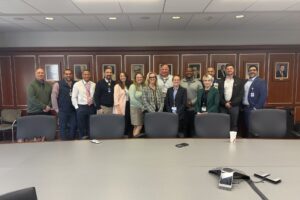
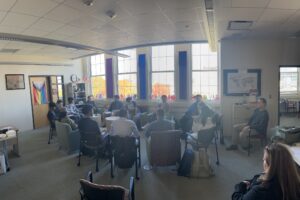
Today, nearly 20 Clinical Laboratory Science students enjoyed networking with recent grads at the Medical Lab Scientist Panel & Lunch, hosted by Chair of the Department of Allied Health Sciences, Michelle Parent, PhD.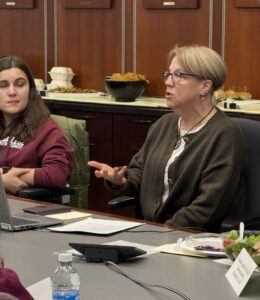
ACPHS students had an opportunity to speak with scientists working in the field to hear about their experiences as laboratory scientists and learn what opportunities are available to them.
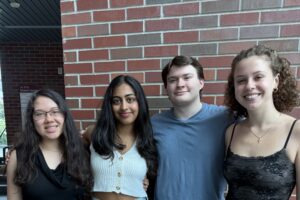
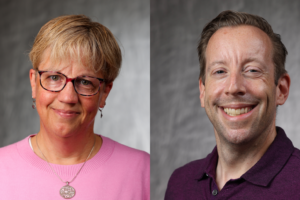
Dr. Parent mediated a panel of ACPHS students and alumni including:
- Racheal Lavigne ’26, MLS(ASCP), Blood Bank, Albany Medical Center
- Nicholas Hunter ’26, MLS(ASCP), Microbiology, Westchester Medical Center
- Elizabeth Grandall ’16, MLS(ASCP), Technical Specialist, Microbiology, Albany Medical Center
- Eithar Khalafalla ’23, MLS(ASCP), Hematology & Chemistry, Albany Medical Center
- Katie Mellon ’19, MLS(ASCP), Transplantation Immunology, Albany Medical Center
- Connor Zabko ’26, MLS(ASCP), ACPHS MS in Cytology candidate
- Rachel Wurth ’19, MS, PhD, MLS(ASCP), Clinical & Translational Science, Mayo Clinical Graduate School of Biomedical Sciences
Some of the topics covered included lab automation vs. manual processes, different laboratory roles and how education supported their journeys, and general, overall career advice.
The CLS program has a 94% pass rate on the American Society for Clinical Pathology board certification exam and a 100% job placement for graduates. ASCP is recognized worldwide as the provider of premier educational offerings for pathologists and laboratory professionals to learn, share, and grow throughout the entirety of their careers.
“Rest assured, there is no superiority among labs. Be happy where you are,” said Racheal Lavigne. “No one lab is more important than another. All labs’ working together is valuable.”
The alumni reminded students to study hard but not stress themselves out. They encouraged students to explore the field, ask questions and pursue opportunities.
Nicholas Hunter shared, “The journey here is fun and so is being on the other side of it. And remember, even though you aren’t patient-facing, your role will still affect a patient’s care.”
Social