New NIH Grant Awarded for Research Collaboration between ACPHS, University of Rochester and The George Washington University
HIV remains one of the most urgent infectious disease challenges of our time. An estimated 40.8 million people were living with HIV globally at the end of 2024, and 630,000 people died from HIV-related causes that year.
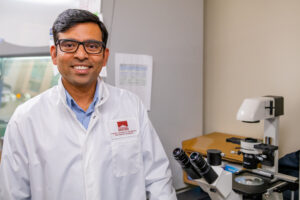
Seeking to turn this tide, Albany College of Pharmacy and Health Sciences Associate Professor, Vir Singh, PhD, is working with researchers from the University of Rochester and George Washington University to find new ways to drive the virus into a deeper, more stable latent state is a critical step toward an HIV cure.
The findings from this research could lay out the groundwork for a novel approach to achieve sustained drug-free viral remission and a functional cure for HIV. This approach is also commonly referred to as ‘Blocking and Locking of HIV.’
The work, which commenced on June 1, is supported by a three-year, $493,213 National Institute of Health Research Enhancement Award grant. The R15 grant will also include undergraduate and graduate students to conduct hands-on biomedical research.
The Science Behind the Research
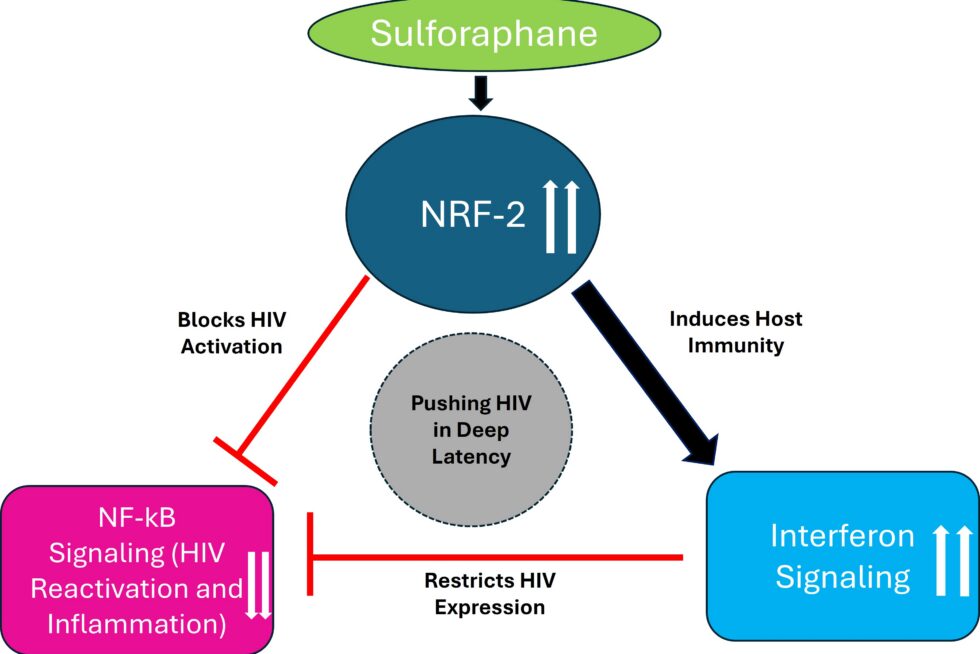
While antiretroviral therapies have transformed HIV into a manageable condition for many, a functional cure remains elusive — largely because HIV can hide in a dormant state within the body, beyond the reach of current treatments while retaining the potential to be reactivated due to interruption in antiretroviral therapy. The research explores the use of sulforaphane, a natural compound, to stimulate the body’s own defenses as a means of pushing HIV into deep latency, rendering HIV incapable of reactivation.
 “Despite significant progress, only 73% of people living with HIV have achieved suppressed viral loads, leaving millions still vulnerable to disease progression and transmission,” explained Dr. Singh.
In collaboration with the University of Rochester researchers, Dr. Meera Singh and Dr. Giovanni Schifitto, will combine rigorous laboratory research with real-world human samples by recruiting study volunteers who are living with HIV. The volunteers will have blood drawn, and researchers will isolate CD4T cells to test the hypothesis.
Dr. Singh explains that latently infected cells will be resistant to HIV reactivation in the presence of Sulforaphane, an NRF-2 inducer. “Our Rochester colleagues will send these unidentified cell samples to us to perform these experiments,” he said.
The collected blood samples will be tested in Dr. Singh’s lab to determine whether the laboratory findings hold up under near real-world conditions — either validating his experimental model or revealing new directions for the research.
Dr. Alberto Bosque from George Washington University will then perform a highly sensitive ELISA on cell Supernatants to quantify an HIV protein as a marker of reactivation.
Dr. Singh has an extensive scientific background in studying molecular mechanisms associated with HIV infection and pathogenesis.
His laboratory focuses on reactivating latent HIV-infected cells to make them susceptible to both the body’s natural immune system and existing drugs. Additionally, his team explores alternative strategies like “block and lock,” which put latent HIV cells into such a deep “coma” that they can never wake up or reactivate, preventing the virus from returning if a patient stops taking daily medication.
His work also explores the “shock and kill” method, a prominent experimental HIV cure strategy designed to eradicate latent virus reservoirs from the body that current medications cannot reach.
Social