Forensic Science BS
Equip yourself with the scientific knowledge and practical skills to master essential lab techniques, learn how to apply criminal justice principles, and work through real-world case studies in every year of study.
In Clinical Laboratory Sciences, you’ll learn how to analyze patient lab values, perform complex lab procedures and help uncover the information doctors need to make accurate, life-saving diagnoses.
Train to become a behind-the-scenes clinical laboratory scientist who helps doctors diagnose and treat everything from cancer to infectious diseases.
If biology, chemistry and problem-solving excite you, the Clinical Laboratory Sciences (CLS) program at ACPHS gives you the chance to apply those passions in a career where your work directly affects patient care.
Clinical laboratory scientists—also known as medical laboratory scientists—are the behind-the-scenes experts who help doctors diagnose and treat disease. Working in hospitals, clinics and labs, they perform complex tests on blood, tissue and other samples to uncover the information needed to make life-saving medical decisions.
Clinical lab scientists play a vital role in health care, performing more than 14 billion tests each year in the U.S.—tests that influence 70% of all medical decisions. As a clinical laboratory sciences major at ACPHS, you’ll train using advanced lab equipment and learn to detect conditions like leukemia, heart disease, diabetes and genetic disorders.
During your first two years as a CLS major, you’ll gain a thorough grounding in basic science along with a broad exposure to the world through coursework in the humanities and social sciences.
In your third year, you’ll enter the professional phase of the program with intensive lab work that prepares you for your fourth and final year of clinical rotations in hospitals and clinics–an essential step in becoming a confident and career-ready professional.
By the time you graduate, you’ll be ready to sit for the ASCP certification exam—your gateway to becoming a certified clinical laboratory scientist. Whether you’re helping identify life-threatening conditions like leukemia or ensuring the accuracy of COVID-19 tests, you’ll be part of a critical health care team that truly saves lives.

According to the U.S. Bureau of Labor Statistics, demand for clinical laboratory scientists is projected to grow 11% through 2030—well above the average for other professions. Graduates entering the field can expect an average salary of $75,474, making it a rewarding and in-demand career choice.
Clinical laboratory scientists are in high demand at:
As a CLS major, you’ll develop as a professional through clinical rotations in your final year. Each semester you’ll complete a rotation under the guidance of a licensed practitioner, applying classroom knowledge in a hands-on health-care setting while building valuable connections in the field.
Rotation sites include Albany Medical Center Hospital, Albany Stratton VA Medical Center, Community Care Physicians' laboratory, Ellis Hospital, Glens Falls Hospital, Nathan Littauer Hospital, Saratoga Hospital, St. Mary’s Hospital (Amsterdam, NY) and St. Peter’s Health Partners.
Our faculty is committed to your success. Whether you’re launching a new career or want to pursue a graduate program in clinical laboratory sciences or a related field, you’ll receive personalized guidance from faculty mentors and a dedicated advisor.
The Medical Laboratory Sciences Club brings together students from various majors who enjoy lab work to highlight the many roles a lab scientist can fill. Events include guest speakers from area laboratories and a chance to learn and to network.
Through ACPHS’s 123-credit Clinical Laboratory Sciences program, you’ll explore courses like human anatomy and physiology, clinical chemistry, biochemistry, genetics and microbiology—all designed to prepare you for professional certification and a successful career in the lab.
Learning Goals and Outcomes
Upon completion of the program, you will be able to:
ASCP Board of Registry Certification Exam:
*Students completing exam to date
For students entering the professional course portion of the program:
Employment Rate:
For more information, please visit accreditation and professional licensure disclosures.

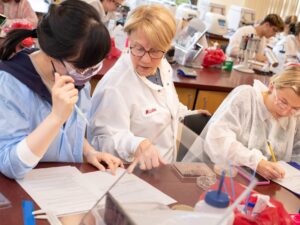
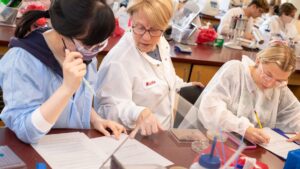
Work side by side with CLS professors.
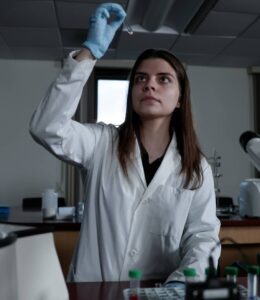
Launch your career in Clinical Laboratory Sciences—one of the most in-demand fields in health care.
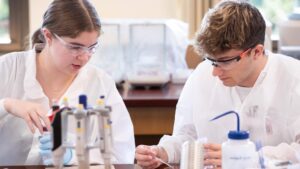
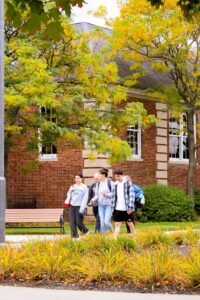
Build your foundation by mastering core sciences.
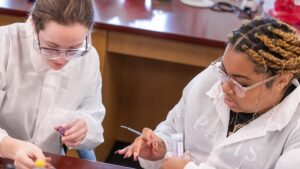
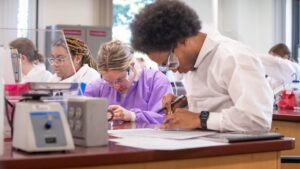
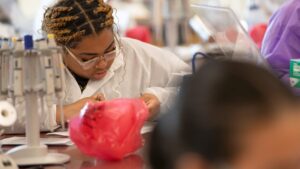
Hands-on learning with your peers—building skills and friendships in every lab session.
“My classmates are just like me in their focus on science and their career goals. And I like the old-school rigorous approach to teaching – they are making us the best in the lab.
 Mustafa
Graduate Student
Mustafa
Graduate Student






Social