Health & Safety
Campus safety, counseling and health services provide support for your safety, health and well-being
Campus Safety: Keeping You Safe, 24/7
On Campus
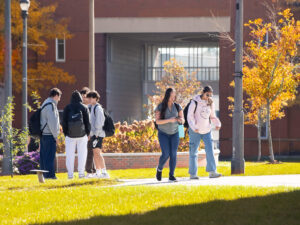
ACPHS partners with University Heights Association Public Safety (UHAPS) to provide 24/7 campus protection—365 days a year. Uniformed officers patrol by foot, bike and vehicle. Safety features like Blue Light emergency phones and electronic alerts help keep you safe and informed.
While not law enforcement, UHAPS officers are licensed and trained security professionals through the New York State Department of State and receive ongoing training in CPR/AED and campus safety protocols.
In the Residence Halls
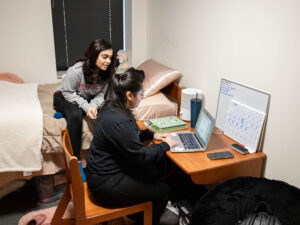
Our residence halls are managed by professional and student Resident Life staff, with 24/7 locked perimeter doors and access-card entry. Each student also receives a key to their room or suite. UHA Public Safety helps ensure the safety of residence halls and nearby parking areas, so you can feel secure where you live.
Need Help?
Public Safety is Always Here.
The UHA Public Safety office is located in the Armory at Sage, 130 New Scotland Avenue, Rooms 111–116.
In an emergency:
- Call 518-244-3177 or use any Blue Light phone on campus for direct access to UHA dispatch
- Call 911 for fire and emergency services
For non-emergencies, Public Safety can be reached at 518-244-4741.
Office of Counseling and Wellness: Your Mental Health Matters

As an ACPHS student, you have access to free mental health and wellness services. All counseling, consultations and referrals are completely confidential, following all legal and professional guidelines.
Whether you’re feeling overwhelmed, stressed, anxious or just need someone to talk to, we’re here to help. You can come to us for support with a wide range of concerns, including:
- Academic pressure and adjustment to college life
- Anxiety, depression and mood changes
- Relationship or family issues
- Alcohol or drug use
- Eating concerns
- LGBTQ+ support
- Suicidal thoughts
Where to Find Us
The Office of Counseling and Wellness is located in the Student Center, Room 209, and open Monday–Friday, 8:30 a.m. to 4:30 p.m.
How to Book an Appointment with a Counselor
-
In Person
Drop by the Student Center (Room 209) to speak to a counselor.
-
Phone
Call 518-694-7262 to schedule an appointment.
-
Email
If you prefer to use email, keep in mind that privacy of communications cannot be guaranteed.
Commonly Asked Questions about Counseling
Services are free for all ACPHS students.
Absolutely. Nothing discussed during sessions can be shared with anyone without your permission. Your privacy is protected under HIPAA and professional ethics. Only in cases where there is a danger to yourself or others can confidentiality be breached, or when court-ordered.
Absolutely not. In accordance with confidentiality rights, ACPHS personnel are not made aware of your use of the Office of Counseling and Wellness unless you request this. It will never show up on your transcripts.
People seek support for all kinds of reasons. While some concerns may be serious, most students reach out for help with everyday challenges—like stress, anxiety, low mood, relationship or family issues, and the pressures of college life.
In your first session, you’ll talk about what’s been on your mind—what brought you in and any concerns you’d like to work through. Your counselor might also ask a few questions to get some background and better understand your situation. It’s also a great time for you to ask any questions you have about how the process works.
Depending on the issue, usually 30-45 minutes.
It depends on what works best for you. Most students come in once a week for a 45-minute session, but you and your counselor will decide what feels right. If you’re going through a tough time, you can meet more often—a few times a week or even daily—until things start to feel better.
You have unlimited access to the Office of Counseling and Wellness, so the number of sessions is totally up to you. Some students feel better after just one visit, while others choose to check in regularly throughout the year. You and your counselor will decide what feels right based on your needs.
No, counselors can’t prescribe medication—but they can help you take the next step if it seems like medication might help. Your counselor can work with you to connect with your primary-care provider back home or refer you to a local psychiatrist—whichever feels right for you.
The ACPHS counselors will refer you to a qualified mental-health professional in the area. Keep in mind that you will be responsible for paying an outside professional’s fee. Sometimes your health insurance will cover the fee; other times you may have to pay out of pocket.
During business hours, go directly to the counseling office and see if a counselor is available. If you have an emergency that involves safety concerns, please contact Capital District Psychiatric Center (CDPC) Mobile Crisis at 518-447-9650, or call 911.
Perfectly fine! Just discuss it with your counselor first.
Contact the Counseling Staff
Peter Cornish, PhD
Director of Counseling and Wellness
518-694-7262
peter.cornish@acphs.edu
Elizabeth Sweet, LCSW-R
Counselor
518-694-7143
elizabeth.sweet@acphs.edu
Health Center: Prioritizing Your Health

When you feel your best, you can do your best. Whether you’re managing stress or fighting off a cold, we’re here to support your health every step of the way.
Services are covered by your ACPHS health and wellness fee, are confidential and conveniently located nearby. If a referral is needed for a specialist, your health insurance may be used to cover those costs.
ACPHS also helps support your healthy lifestyle with a 5,000-square-foot Fitness Center featuring weights, cardio equipment and a dance/aerobics room. Plus, you can enjoy a variety of nutritious meal options through Chartwells in the dining hall.
Wellness Center: Your On-Campus Health Resource
As an ACPHS student, you have access to the wellness centers at Russell Sage College in both Albany and Troy. These trusted health centers offer holistic, confidential medical care—from sick visits to referrals when you need more specialized support. Nurse practitioners work closely with a physician to make sure you get the care that’s right for you.
Albany Wellness Center
The Albany Wellness Center is a 15-minute walk from campus.
Kahl Campus Center, Lower Level
Russell Sage College, 140 New Scotland Ave
518-292-1917
Monday–Friday, 8:30 a.m.–5 p.m
albanywellness@sage.edu
Troy Wellness Center
The Troy Wellness Center is 10 miles from campus.
Kellas Hall, 1st Floor, Russell Sage College
518-244-2261
Monday–Friday, 8:30 a.m.–5 p.m.
troywellnesscenter@sage.edu
Russell Sage Wellness Center website
Urgent Care Centers
If you need care outside of the Wellness Center’s hours, you can visit a nearby urgent care or emergency room. Services at these off-campus locations aren’t covered by the student wellness fee, so you’ll need to use your own insurance or another form of payment.
Before heading to urgent care, call ahead or check their website to confirm they accept your insurance and to see if you can schedule ahead to cut down on wait time. Depending on your plan, co-pays and fees for tests may apply. See the insurance services section for details.
WellNow Urgent Care
Located 4 miles from campus at:
1438 Western Ave, Albany, NY
Phone: 518-649-9986
Hours: 8 a.m. to 8 p.m.
WellNow Urgent Care
EmUrgent Care
Two nearby locations operated by Albany Medical Center
98 Wolf Rd, Suite 16, Colonie, NY (8.3 miles from campus)
Phone: 518-264-9000
Hours: 9 a.m. to 9 p.m.
329 Glenmont Rd, Glenmont, NY (9.6 miles from campus)
Phone: 518-264-9000
Hours: 9 a.m. to 9 p.m.
Community Care Physicians – Latham Urgent Care
Located 12 miles from campus at:
711 Troy-Schenectady Rd, Suite 102, Latham, NY
518-783-3110
Monday-Friday 9 a.m. to 11:30pm
Weekends: 10 a.m. to 7:30 p.m., Holidays: 10 a.m. to 4:30 p.m.
Community Care Physicians
COVID-19 Guidance
You’re encouraged to stay up to date with the latest COVID-19 vaccines, especially if you’re participating in clinical experiences, internships or study-abroad programs where vaccination may be required.
The College may adjust its vaccine policies based on CDC recommendations, New York State Department of Health guidance or evolving public health conditions.
Tested Positive?
You don’t need to report a positive COVID test to the Albany Wellness Center—but you must follow CDC isolation guidelines.
Feeling Sick? Stay Home
If you have respiratory or infectious symptoms, please stay home until you meet CDC criteria to return. Your instructors will support you:
- Short-term absence? Contact your professors directly about missed work.
- Longer-term illness? Contact Student Experience with medical documentation. The Office of Student Affairs will notify your instructors and support team.
Need Help?
Contact the Albany Wellness Center for support or to request a free at-home COVID test. Email us at albanywellness@sage.edu or call us at 518-292-1917.
Insurance Services
As part of your infirmary fee, you have access to on-campus health services through the College’s medical partners. To help keep you healthy and protected, ACPHS requires all full-time students to have health insurance.
If you’re not already covered under a family or private plan, you can enroll in a high-quality insurance plan offered through the College through Anthem Blue Cross.
Health Insurance Requirements and Information
Approved insurance plans will:
- Provide basic coverage to our students (compliant with current Affordable Care Act Standards Essential health benefits – Glossary | HealthCare.gov) within a 50-mile radius of ACPHS.
- Provide both emergency and non-emergency coverage within a 50-mile radius of ACPHS
- Be part of a domestic US health-insurance plan. International students are automatically enrolled in the plan (exceptions are made on a case-by-case basis).
- Limited exceptions will be made on a case-by-case basis for students who are on rotations outside of the Albany area or studying remotely.
An insurance charge of $3,590 will be applied to your account to ensure you have coverage. If you have adequate private insurance coverage, you must waive the College’s insurance plan by August 1st. Students who do not waive the College health insurance plan by August 1st will be charged the full non-refundable amount of $3,590. (See how under “Registration/Waiver Procedures” below.)
- If you’re covered under ACPHS’ Anthem Student Health Insuranc Plan, you’ll pay a standard co-pay for doctor visits. Any additional services will be billed to Anthem based on your plan.
- If you have a different insurance provider, your co-pay and billing will follow the terms of your specific plan.
If you already have health insurance and want to waive the College’s plan, you must submit a waiver form by August 1. Here’s how:
- Log into Campus Café to complete the waiver form.
- You’ll get a confirmation email from our insurance partner, Haylor Freyer & Coon, letting you know if your waiver was accepted or denied.
- If approved, your student ledger will be updated within 24-48 business hours.
We’re partnering with Haylor Freyer & Coon (an Alera Group) to handle all student health insurance waivers and enrollments. You’ll receive emails from student@haylor.com throughout the summer with step-by-step instructions and reminders.
The student health insurance plan through Anthem Blue Cross runs from August 21, 2025 to August 20, 2026.
- If you get private insurance during the year, you can waive the College plan by contacting Haylor Freyer & Coon. Your student account will be adjusted based on when your new coverage begins.
- If you waive the plan at first but later lose your private coverage, you can still enroll in the Anthem plan midyear. Your cost will be prorated based on your enrollment date.
- If you proactively enroll, you’ll receive your member ID right away—helpful for scheduling appointments or filling prescriptions.
- If you don’t enroll early, your membership info will be sent after August 21.
Questions? Reach out to Haylor Freyer & Coon for help with waivers, enrollment, or plan details: 1-866-535-0456 or student@haylor.com.
The College Plan provides for the payment of charges incurred for covered benefits with an unlimited maximum benefit per policy year.
Covered benefits include, but are not limited to, the following:
- Inpatient/outpatient coverage
- Physician’s visits
- Urgent care/emergency room
- X-rays/lab services
- Wellness/physical exams
- Prescriptions
A summary of benefits is available in the health-insurance enrollment book and benefits summary.
Sometimes students lose coverage during the year. This could be due to a parent’s job change, aging out of a family plan or switching to part-time status.
If your coverage changes, you can still enroll in the College’s health insurance plan at a prorated rate.
Just remember: It’s your responsibility to let the College know about any changes and to make sure you have valid health insurance while enrolled at ACPHS.
If you leave ACPHS to enter active military service, your student health insurance coverage will end, and you can request a prorated refund of your premium.
No other refunds will be issued—including if you miss the August 21 waiver deadline or don’t complete your registration.
Immunization Policy and Requirements
Vaccines play a key role in preventing disease outbreaks. To help protect our campus community, ACPHS requires all incoming students to meet pre-entrance immunization requirements.
Students who do not comply with the policy will have an administrative hold placed on their account, preventing class registration, attendance and access to grades.
For more specific disease information regarding measles, mumps, rubella and meningococcal disease, refer to the New York State Department of Health website at or the Centers for Disease Control website.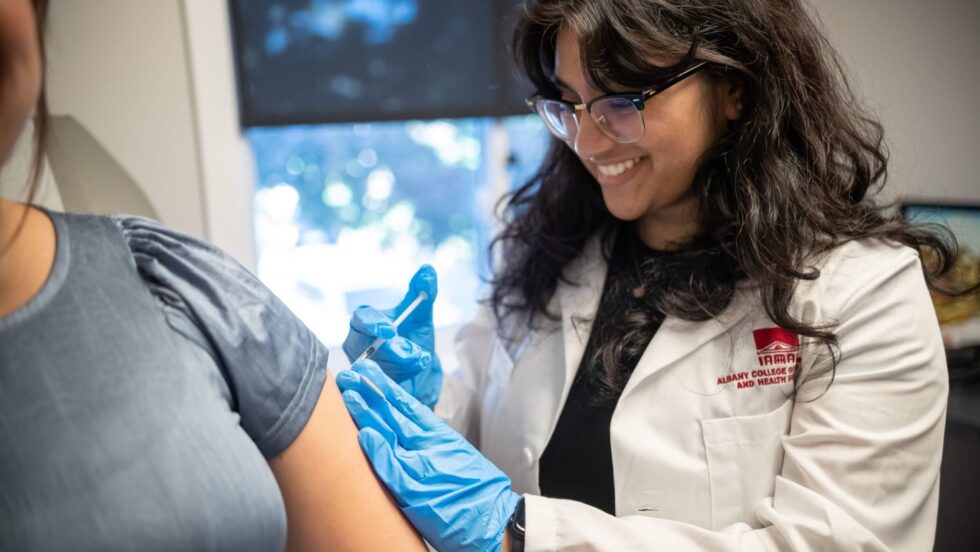
Required Immunizations and Documentation for Incoming Students
The following immunizations are required prior to registration for classes:
- NYS Public Health Law 2165 requires post-secondary students to show immunity to measles, mumps and rubella (two doses of MMR vaccine or equivalent for each disease, as outlined below, or documented physician-diagnosed disease for measles or mumps.) Persons born prior to January 1, 1957 are exempt from this requirement.
- NYS Public Health Law 2167 requires postsecondary institutions to distribute information about meningococcal disease and vaccination to students enrolled for at least six semester hours (or the equivalent per semester), or parents/guardians of students under the age of 18. The institution is required to maintain a record of the following for each student:
- Certificate of Immunization for meningococcal meningitis disease within the last five years; or
- A response to receipt of meningococcal meningitis disease and vaccine information signed by the student or the student’s parent or guardian;
and, either
-
- Self-reported or parent recall of meningococcal meningitis immunization within the past five years; or
- An acknowledgement of meningococcal disease risks and refusal of meningococcal meningitis immunization signed by the student or student’s parent or guardian.
- Varicella/Chicken Pox – proof of vaccine series, positive (reactive) antibody titer or history of disease.
- Hepatitis B – traditional three doses, two doses of Recombivax or four accelerated doses of Twinrix.
- COVID-19 – strongly recommended but not required.
Measles
Students born on or after January 1, 1957 must submit proof of immunity to measles. One of the following is required:
- The student must submit proof of two doses of live measles vaccine: the first dose given no more than four days prior to the student’s first birthday and the second at least 28 days after the first dose; or
- The student must submit serological proof of immunity to measles. This means the demonstration of measles antibodies through a blood test performed by an approved medical laboratory; or
- The student must submit a statement from the diagnosing physician, physician assistant or nurse practitioner that the student has had measles disease; or
- The student must submit proof of honorable discharge from the armed services within 10 years from the date of application to the institution. The proof of honorable discharge shall qualify as a certificate enabling a student to attend the institution pending actual receipt of immunization records from the armed services; or
- If a student is unable to access his/her immunization record from a health-care provider or previous school, documentation that proves the student attended primary or secondary school in the United States after 1980 will be sufficient proof that the student received one dose of live measles vaccine. If this option is used, the second dose of measles vaccine must have been administered within one year of attendance at a postsecondary institution.
Mumps
Students born on or after January 1, 1957 must submit proof of immunity to mumps. Only one of the following is required:
- The student must submit proof of one dose of live mumps vaccine given no more than four days prior to the student’s first birthday; or
- The student must submit serological proof of immunity to mumps. This means the demonstration of mumps antibodies through a blood test performed by an approved medical laboratory; or
- The student must submit a statement from the diagnosing physician, physician assistant or nurse practitioner that the student has had mumps disease; or
- The student must submit proof of honorable discharge from the armed services within 10 years from the date of application to the institution. The proof of honorable discharge shall qualify as a certificate enabling a student to attend the institution pending actual receipt of immunization records from the armed services.
Rubella
Students born on or after January 1, 1957 must submit proof of immunity to rubella. Only one of the following is required:
- The student must submit proof of one dose of live rubella vaccine given no more than four days prior to the student’s first birthday; or
- The student must submit serological proof of immunity to rubella. This means the demonstration of rubella antibodies through a blood test performed by an approved medical laboratory. (Because rubella rashes resemble rashes of other diseases, it is impossible to diagnose reliably on clinical grounds alone. Serological evidence is the only permissible alternative to immunization.); or
- The student must submit proof of honorable discharge from the armed services within 10 years from the date of application to the institution. The proof of honorable discharge shall qualify as a certificate enabling a student to attend the institution pending actual receipt of immunization records from the armed services.
Immunization documentation should be prepared by a physician, physician assistant or nurse practitioner, and shall specify the vaccines and give the dates of administration. It may also show physician-verified history of disease, laboratory evidence of immunity or medical exemption. This includes documents such as a certificate from a physician, a copy of the immunization portion of the cumulative health record from a prior school, a migrant health record, a union health record, a community health plan record, a signed immunization transfer card, a military dependent’s “shot” record, the immunization portion of a passport, an immunization record card signed by a physician, physician assistant or nurse practitioner, or an immunization registry record.
Advice of Elevated Risks for Certain Individuals (Lab Safety Form)
Conducting activities in a laboratory might put some persons at elevated risk sufficient to warrant their exclusion from the laboratory or other appropriate accommodation. Therefore, all new students are required to sign a form related to the risks of conducting laboratory activities. If an individual feels they may be at elevated risk, they should discuss the issue with their physician or a laboratory instructor to request accommodation if needed. The form will be made available electronically to all new students.
Although not required, the following are strongly recommended:
- Tetanus, Diphtheria, Pertussis (DTP) – within the last 10 years
- Tuberculosis (TB) Screening – All incoming students should complete a risk assessment questionnaire to identify those who have not been at increased risk for exposure to TB. Students who have one or more identified risk factors for exposure to TB should have a tuberculin skin or blood test.
- Seasonal Influenza Vaccination: It is recommended that all students obtain an annual flu vaccination, dependent on national vaccine supply.
Cytotechnology Program Candidates
A vision exam (including a color blindness test) is required for all Cytotechnology students. The exam needs to be signed and completed by a physician or ophthalmology technician.
Terms to Understand
- In Process: A student is considered “in process” and allowed to attend classes if he/she has presented documentation that shows the student is in the process of completing the immunization requirements of PHL Section 2165. To be “in process” the student must have received at least one dose of live measles virus vaccine, have complied with the requirements for mumps and rubella, and have an appointment to return to a health practitioner for the second dose of measles if this appointment is scheduled no more than 90 days since administration of the first dose of measles virus vaccine.A student can be considered in process of complying with PHL Section 2167 regarding meningococcal disease until a 30 day grace period has elapsed. The 30 day grace period may be extended to 60 days if a student can show a good faith effort to comply with PHL Section 2167. If a student is granted the extended grace period, then exclusion begins immediately after the 60 days elapses.
- Exclusion: “Exclusion” is the process whereby noncompliant students are not permitted continued attendance at the institution; whereas, “attendance” means the student’s physical presence on campus (i.e., exclusion from classes, dorm residence and other curricular and extra-curricular campus activities). Exclusion should begin immediately after a 30 day grace period as stipulated under PHL Section 2165 (measles, mumps and rubella requirements), or after 45 days if a student is from out of state or from another country and can show a good faith effort to comply, or when a disease outbreak occurs.For institutions to be in compliance with PHL Section 2167 (meningococcal meningitis response form), exclusion of students should begin immediately after the 30 day grace period elapses. The 30 day grace period may be extended to 60 days if a student can show a good faith effort to comply with PHL Section 2167. If a student is granted the extended grace period, then exclusion begins immediately after the 60 days elapse.
Receiving Vaccinations
It is the obligation of the student to complete required immunizations/proof of immunity prior to starting classes. Due to insurance regulations, students should go through their primary care physician to do so, if possible.
Please note that Albany College of Pharmacy and Health Sciences does not administer immunizations, blood tests or titers.
You may be eligible for an exemption from immunization requirements.
Medical Exemption
If a licensed physician, physician assistant, nurse practitioner or licensed midwife caring for a pregnant student certifies in writing that the student has a health condition which is a valid contraindication to receiving a specific vaccine, then a permanent or temporary (for resolvable conditions such as pregnancy) exemption may be granted. This statement must specify those immunizations which may be detrimental and the length of time they may be detrimental. Provisions need to be made to review records of temporarily exempted persons periodically to see if contraindications still exist. In the event of an outbreak, medically exempt individuals should be protected from exposure. This may include exclusion from classes or campus.
Religious Exemption
A student may be exempt from vaccination if, in the opinion of the institution, that student (or student’s parent(s) or guardian of those less than 18 years old) holds genuine and sincere religious beliefs which are contrary to the practice of immunization. The student requesting exemption may or may not be a member of an established religious organization. Requests for exemptions must be written and signed by: the student if 18 years of age or older, or parent(s), or guardian if under the age of 18. The institution may require supporting documents. It is not required that a religious exemption statement be notarized. In the event of an outbreak, religious exempt individuals should be protected from exposure. This may include exclusion from classes or campus.
Note: Sites hosting experiential education rotations may deny a student’s participation in the experiential program because of the inability to produce an appropriate health clearance, which could result in delayed graduation or the inability to graduate from the program.

Social