

Clinical Laboratory Sciences BS
In Clinical Laboratory Sciences, you’ll learn how to analyze patient lab values, perform complex lab procedures and help uncover the information doctors need to make accurate, life-saving diagnoses.

As a specialist in cytology and molecular cytology, you’ll support medical teams with critical lab-based insights that directly impact patient care.
Earn your cytotechnology degree in just 16 months with our accelerated master’s program, available in both in-person and hybrid options.
Turn your passion for science into a career that directly improves lives. At ACPHS, the Master of Science in Cytotechnology and Molecular Cytology prepares you to play a critical role in diagnosing disease and treating disease by analyzing cells for abnormalities that signal cancer, precancerous changes and other medical conditions.
Great patient care begins with an accurate diagnosis. Using advanced laboratory and microscopy techniques, you’ll learn to detect cellular changes caused by infections, autoimmune disorders and cancer, supporting physicians in making accurate, timely diagnoses that shape treatment plans.
As one of the longest-standing cytotechnology programs in the country, ACPHS is recognized for its rigorous, future-focused curriculum, personalized faculty mentorship and immersive, hands-on training. The ACPHS MS in Cytotechnology and Molecular Cytology program is accredited by the Commission on Accreditation of Allied Health Education Programs (CAAHEP).
The 16-month program is offered on campus or in a hybrid format through our satellite partners, giving you the flexibility to learn in a way that fits your life.
With access to more than 40 clinical practicum sites, you’ll gain hands-on experience that sets you apart. Graduates of the program boast a 100% ASCP exam pass rate and 100% job placement, entering the workforce confident, prepared and in demand.

ACPHS’ accelerated 16-month, 58-credit master’s program blends intensive coursework in cytotechnology (25 credits) and biomedical sciences (33 credits), preparing you for a fast-track career in diagnostic lab science. Students enroll in August and graduate the following December.
You’ll study gynecologic and non-gynecologic cytology, cellular pathophysiology and histology—gaining insight into the molecular and biochemical mechanisms of disease.
Hands-on courses like flow cytometry cover machine setup, fluorochromes, spectral overlap, experimental design and data analysis. You’ll also build essential skills in fine needle aspiration—key to real-world clinical diagnostics.
Upon successful completion of the program, you will be able to:
Join a close-knit, like-minded community at ACPHS and complete your master’s in cytotechnology and molecular cytology in just 16 months.
Study in person on our beautiful Albany campus, connect with supportive faculty and prepare for a meaningful career as a vital part of the medical team.
Not ready to relocate but still want to advance your career? Our hybrid option lets you complete the Cytotechnology and Molecular Cytology degree through one of our satellite extension sites.
You’ll learn alongside Albany campus peers through a mix of real-time (synchronous) online classes and recorded (asynchronous) lectures you can complete on your own schedule. Hands-on lab activities will be completed at the satellite extension site. This flexible format is ideal for students balancing work, life and professional goals—without compromising the quality of your education.
Established satellite sites include:
1. Wisconsin State Laboratory of Hygiene, Madison, WI
2. Health First Holmes Regional Medical Center, Melbourne, Florida
Want to request a satellite extension site in your area? We recommend that applicants for the upcoming entry term reach out early about setting up a site in their preferred area as it can take up to six months or more for a site to be established.
Prospective students don’t need to arrange sites, but those interested in establishing one in their preferred location of study should submit the request form below. Upon receipt, Program Director Caleigh-Shea Norray, will follow-up.
New site requests may not be secured in time for the upcoming academic year. The last date to request a new satellite extension site for the Fall 2027 entry term is April 15, 2027.
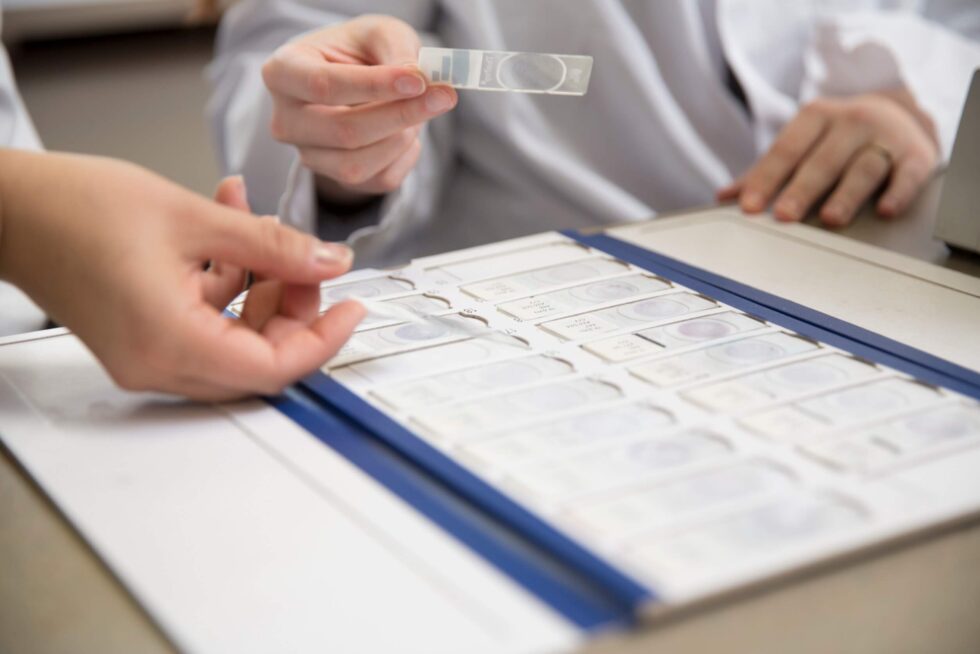
Cytotechnology and molecular cytology use advanced diagnostic tools to detect cancer, infections and autoimmune diseases at their earliest stages—often before symptoms appear. As a cytologist, you’ll analyze human cells to uncover critical clues about a patient’s health, playing a key behind-the-scenes role on the health-care team.
If you’re detail-oriented, love solving complex problems and want a career that makes a real impact, this field offers exciting opportunities. With growing demand in hospitals, labs and research centers, trained cytologists are more essential than ever.
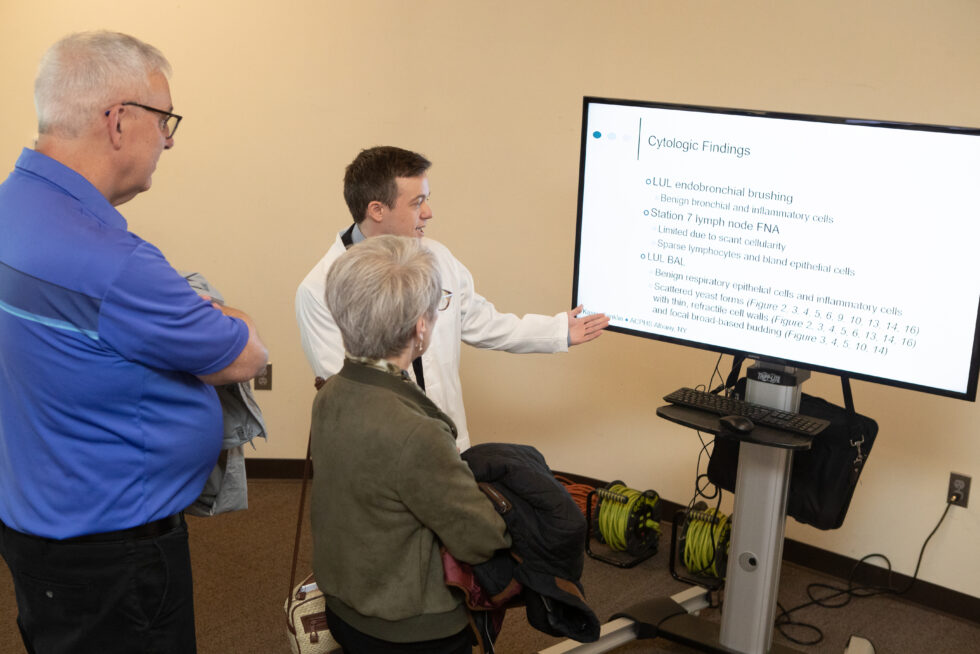
Put your classroom and lab knowledge into action through one of 40+ hands-on clinical practicum sites across the Northeast and beyond—including opportunities as far as California. You’ll work alongside licensed professionals, gaining real-world experience that builds your confidence and sharpens your skills. For students in the hybrid program, your satellite extension site may serve as a clinical rotation site.
In your final semester, you’ll complete a three-credit capstone project that ties everything together—from coursework and lab training to clinical rotations—giving you the chance to dive deeper into an area of interest and demonstrate your professional readiness.
Cytology is an evolving field with strong career potential, with demand for clinical lab technologists expected to grow 11% in the next decade.
ACPHS graduates have gone on to thrive in roles as cytologists, lab supervisors and educators at top institutions including:
With a median salary of $84,838–$89,287, a master’s degree not only boosts your earning potential but also sets you up for leadership opportunities in the lab.













Social